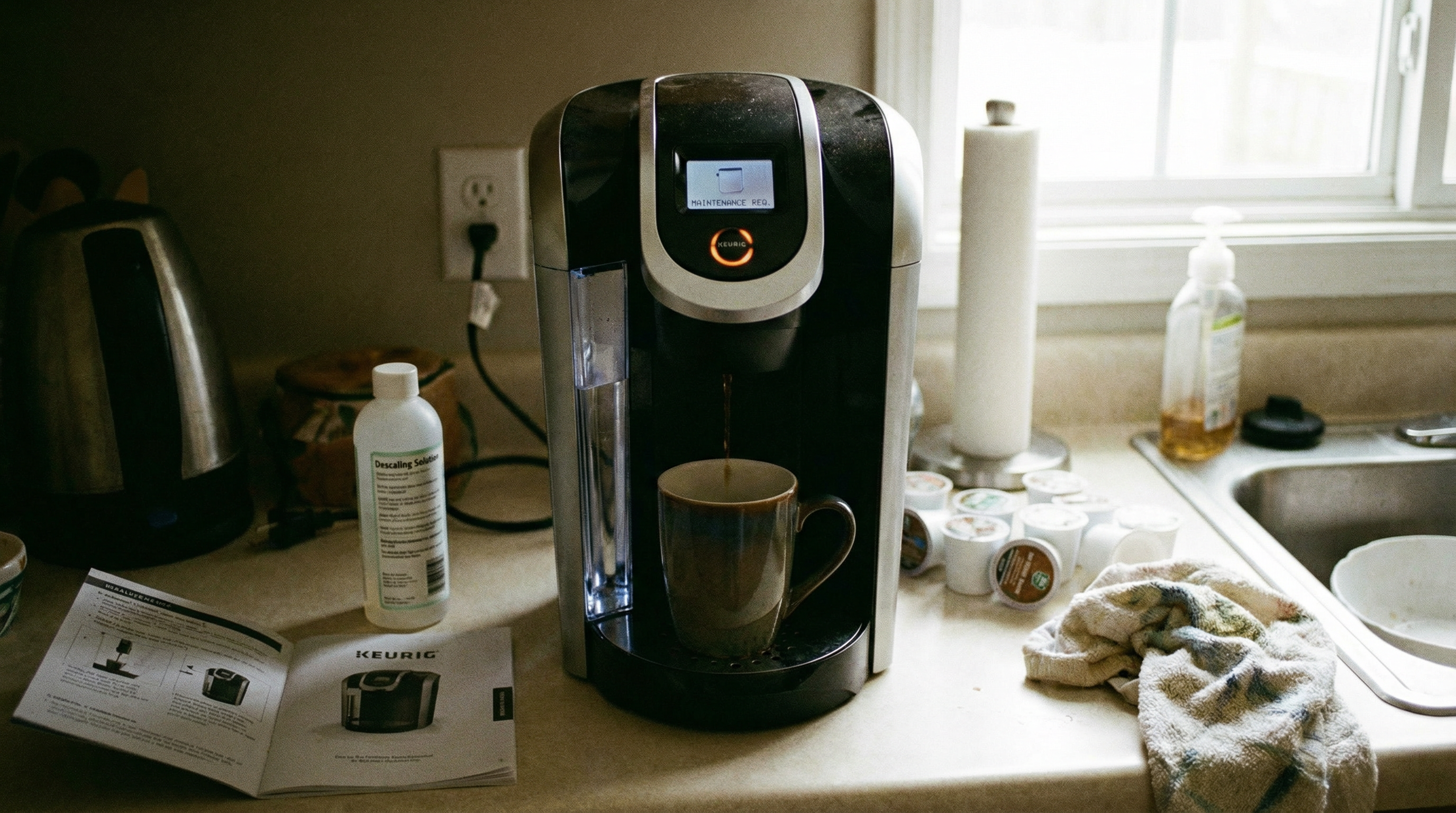
When your Keurig starts brewing slowly or dripping instead of streaming, something is blocking or limiting the flow—usually mineral buildup (scale) or a clogged needle. This guide walks you through the most common causes and fixes so you can get back to a fast, consistent cup. For prevention, see our descale Keurig without vinegar guide; for getting a stronger cup once it’s running well, see how to make a strong cup of coffee with Keurig.
Scale (Mineral Buildup) Is the Usual Cause
Hard water leaves minerals inside the machine’s heating element and lines. Over time they restrict flow and slow the brew—sometimes to a trickle. Fix: Descale the machine. Use Keurig’s descaling solution or citric acid and follow the rinse steps so no residue remains. After descaling, brewing speed usually returns to normal. How often you need to descale depends on your water; every 3–6 months is typical. If you see a “Descale” or “Add Water” light, don’t ignore it.
Clogged Needle
The needle that punctures the K-Cup can get blocked by grounds or old coffee. That reduces or blocks water flow. Fix: Turn the machine off and unplug it. Remove the drip tray and any pod holder. Use a paper clip or Keurig’s needle cleaning tool to gently clear the needle (the small tube that goes into the pod). Run a water-only cycle afterward. Check your manual for your model’s recommended cleaning.
Water Reservoir and Air Locks
If the reservoir isn’t seated correctly or there’s an air lock in the line, the pump may not pull water properly and the brew will be slow or incomplete. Fix: Remove the reservoir, rinse it, and reattach firmly. Run a few water-only cycles to purge air. Make sure the reservoir is filled above the minimum line.
Other Checks
Water temperature: If the machine hasn’t heated fully, the first cup can be slow. Let it finish heating before brewing. Filter: If you use a water filter in the reservoir, a dirty or old filter can restrict flow—replace it per the manufacturer’s schedule. Altitude: Very high altitude can affect pump performance; check if Keurig has guidance for your area. For more Keurig tips and machine options, see our best Keurig coffee maker guide.
Conclusion
A slow-brewing Keurig is usually due to scale or a clogged needle. Descale regularly (see descale Keurig without vinegar) and clean the needle when needed. Ensure the reservoir is full and correctly attached. For more help, see best Keurig coffee maker and how to make a strong cup of coffee with Keurig.
See Also
- Descale Keurig Without Vinegar — step-by-step descaling.
- Best Keurig Coffee Maker — features and maintenance.
- How to Make a Strong Cup of Coffee with Keurig — get more from your machine.