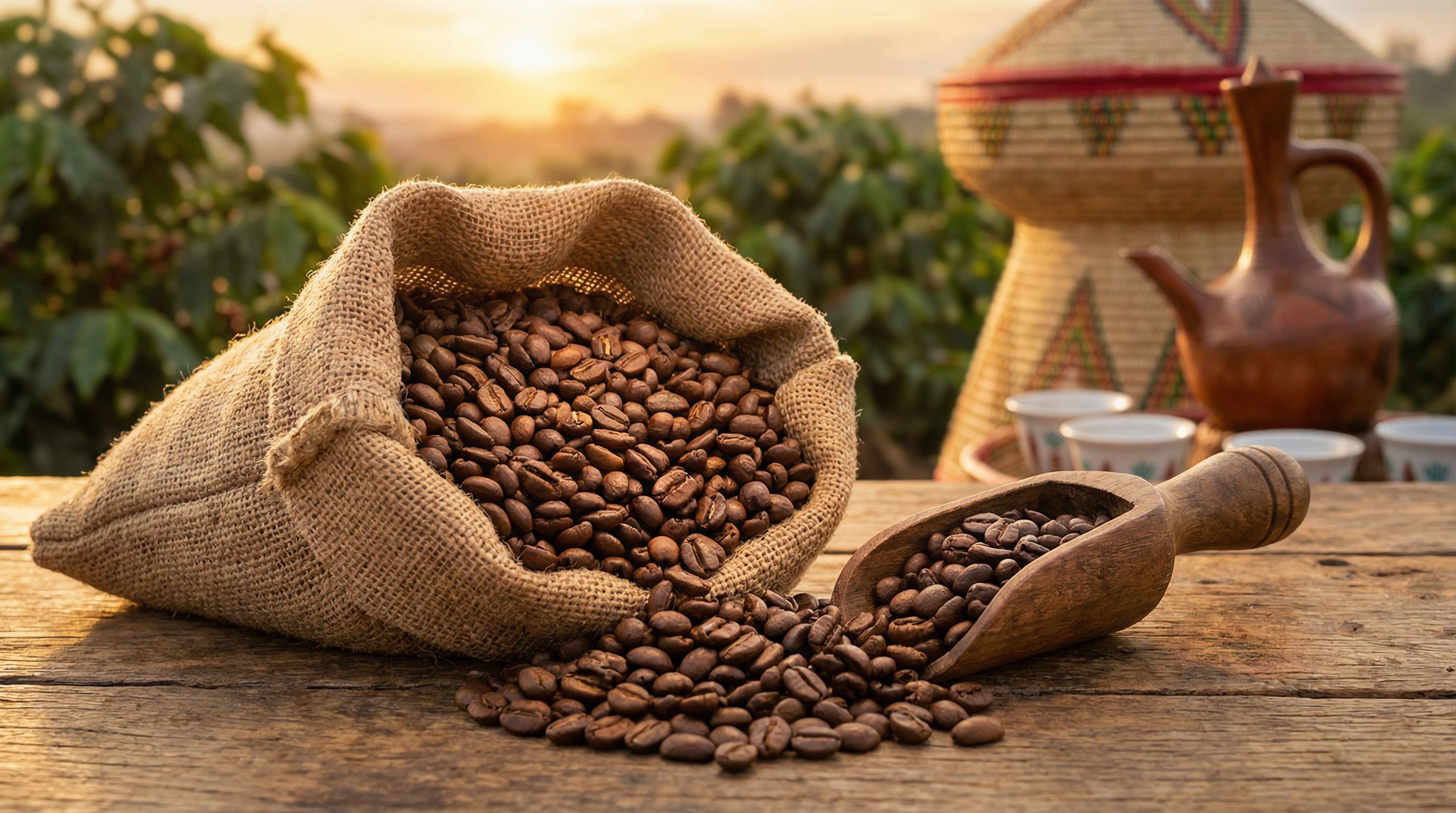
Sidamo (or Sidama) is one of Ethiopia’s most famous coffee-growing regions. Ethiopia is often called the birthplace of coffee, and Sidamo’s high altitude, climate, and heirloom varieties produce beans known for brightness, fruitiness, and complexity. This guide covers what makes Sidamo coffee special, how it tastes, how it’s processed, and how to brew it so you get the most from your cup—whether you’re new to single-origin or already a fan.
The Sidamo Region
Sidamo (Sidama) is in southern Ethiopia, part of the larger Sidama Zone. Coffee is grown at high altitudes—often 1,500 to 2,200 meters and above—which contributes to denser beans and the bright, complex flavors the region is known for. Many farmers grow heirloom varieties (traditional Ethiopian cultivars that aren’t always classified by the names we use elsewhere). The combination of altitude, soil, and variety gives Sidamo a distinct profile compared to other Ethiopian regions (e.g. Yirgacheffe, which is actually a micro-region within Sidamo for some classifications, or Harrar). Sidamo coffee is usually washed (wet-processed) or natural (dry-processed); the process affects body and fruitiness. Washed Sidamo tends to be cleaner and more tea-like; natural Sidamo often has more body and berry notes. When you buy, look for roasters who specify Sidamo (or Sidama) and, if possible, the process and sub-region.
Flavor Profile
Sidamo coffee is often described as fruity, floral, and sometimes wine-like. You might get notes of stone fruit (peach, apricot), citrus (lemon, orange), berry (blueberry, strawberry), or jasmine and bergamot. Acidity is usually medium to high—bright and lively rather than harsh. Body can range from light and tea-like (especially washed) to rounder and juicier (natural). The exact profile depends on the specific area, process, roast, and how you brew. If you like bright, complex, fruit-forward coffees, Sidamo is a great place to start. If you prefer something smoother and less acidic, you might prefer a Jamaica Blue Mountain or a best decaf with milder notes.
How to Brew Sidamo
Sidamo often shines with filter methods that let the delicate flavors come through. Pour-over (V60, Chemex, or similar) is a popular choice—clean paper filter, controlled pour, and a recipe that highlights clarity. Drip works too if your coffee maker produces a clean cup. French press will give more body and oils; you might get a rounder, heavier cup that still shows fruit. Use fresh beans and a burr grinder for the best result—grind right before brewing. A typical starting point: medium-fine grind for pour-over, 1:15 to 1:17 ratio, water at 195–205°F, 3–4 minutes total brew time. Adjust to taste. Avoid over-extracting (too fine, too hot, or too long) or you’ll lose the brightness and get bitterness.
Buying and Storing
Buy from specialty roasters who name the region and roast date. Sidamo is widely available, but quality varies—cheap supermarket “Ethiopian” may not be true Sidamo or may be stale. Store in an airtight container away from light and heat; use within a few weeks of the roast date for peak flavor. Whole bean stays fresh longer than pre-ground.
Conclusion
Sidamo coffee is a great way to explore Ethiopian flavors: bright, fruity, and complex. Start with a light or medium roast and a clean brew method like pour-over or drip. Pair it with a good grinder and fresh water, and you’ll get a cup that’s a world away from generic coffee.
See Also
- Jamaica Blue Mountain Coffee — another prized origin, smoother and milder.
- Best French Press — for a fuller-bodied Sidamo cup.
- Best Coffee Makers — drip, pour-over, and more for brewing at home.