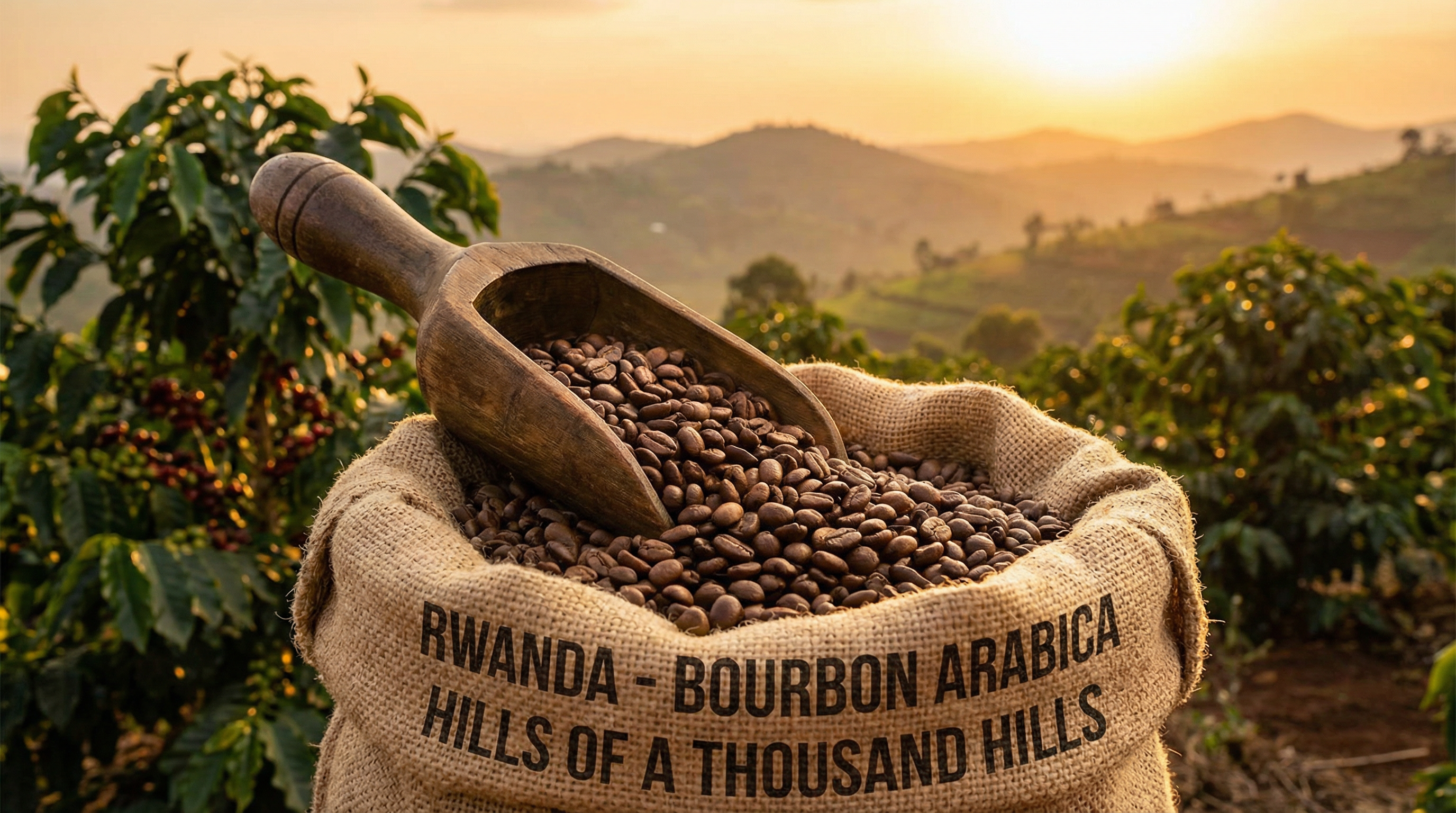
Rwanda has become a respected origin for specialty coffee. High altitude, volcanic soil, and a focus on washed processing produce beans that are often bright, clean, and fruity—with notes of red berry, citrus, and sometimes floral or tea-like character. This guide covers what makes Rwanda coffee special, how it tastes, and how to brew it so you get the most from your cup. If you already enjoy Ethiopian Sidamo or Jamaica Blue Mountain, Rwandan coffee is another origin worth exploring.
The Rwanda Coffee Story
Rwanda’s coffee sector has rebuilt and professionalized over the past decades. Much of the coffee is grown by smallholders at high altitudes (often 1,200–2,000+ meters), which contributes to density and flavor development. Washed (wet) processing is common: the cherries are pulped, fermented, washed, and dried. That process tends to give a clean, bright cup with clear acidity. Cooperatives and washing stations have improved quality and traceability, so you can often find single-region or single-station Rwandan coffees from specialty roasters. Regions you might see include Nyungwe, Kivu, and others—each can have subtle differences in profile.
Flavor Profile
Rwandan coffee is often described as bright, fruity, and clean. Expect red fruit (raspberry, strawberry, cherry), citrus (orange, lemon), and sometimes floral or tea-like notes. Acidity is usually medium to high—lively and wine-like rather than harsh. Body can be medium, and the finish is often clean and sweet. The exact profile depends on the region, processing, and roast. Light to medium roasts tend to highlight the fruit and acidity; darker roasts will round it out and add more body. For a different African profile, compare with our Sidamo guide; for something smoother and milder, see Jamaica Blue Mountain or best decaf.
How to Brew Rwanda Coffee
Rwanda’s clean, bright character often shines with filter methods: pour-over (V60, Chemex, or similar) or drip from a good coffee maker. Use fresh beans and a burr grinder set to medium or medium-fine. A typical ratio is 1:15 to 1:17 coffee to water, with water at 195–205°F. Avoid over-extracting (too fine, too long) or you’ll lose the brightness and get bitterness. French press will give more body and oils if you prefer a rounder cup. Store beans in an airtight container and use within a few weeks of the roast date for best flavor.
Buying and Storing
Buy from specialty roasters who name the region or washing station and show a roast date. Rwanda is more widely available than it used to be, but quality still varies—cheap or vague “African” blends may not represent the best of Rwanda. Whole bean stays fresh longer than pre-ground. Store away from light and heat.
Conclusion
Rwandan coffee offers bright, fruity, and clean flavors that work well with filter brewing and light to medium roasts. If you like Sidamo or other East African coffees, Rwanda is a natural next step. Use a good grinder and a pour-over or drip setup to let the flavor shine.
See Also
- Sidamo Coffee — another East African origin with fruity, complex flavors.
- Jamaica Blue Mountain Coffee — a smoother, milder alternative.
- Best Coffee Makers — drip and pour-over for brewing Rwanda at home.