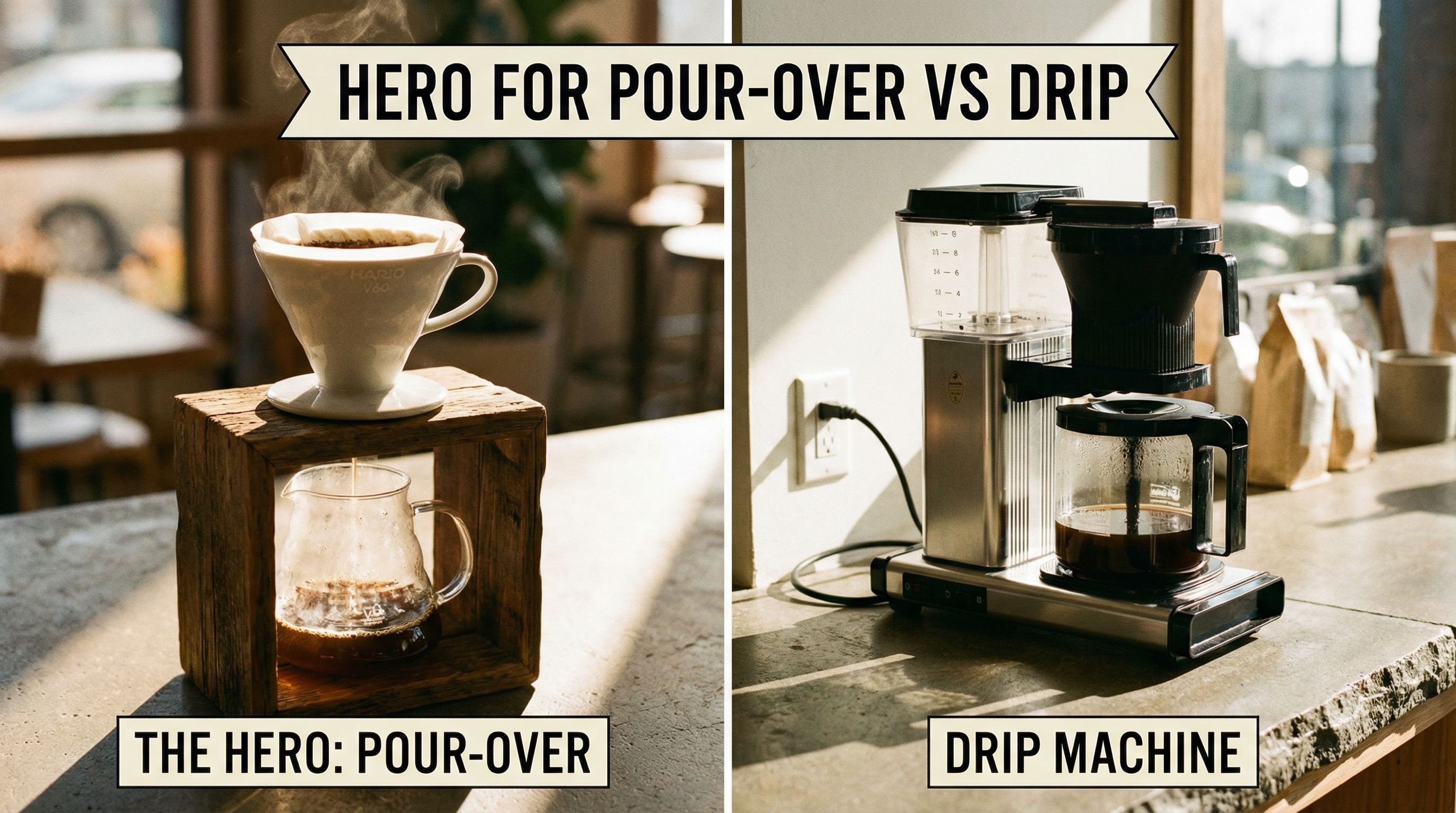
Pour-over and drip both run water through ground coffee held in a filter, but the way the water is delivered—and how much control you have—differs. Drip machines do it automatically; pour-over is manual, one pour at a time. This guide breaks down pour-over vs drip so you can decide which fits your routine and taste, and where they sit next to other options like French press and espresso in our best coffee makers roundup.
How Drip Coffee Works
Drip (automatic) coffee makers heat water in a reservoir, then spray or drip it over a basket of grounds. The brewed coffee drips into a carafe below. You add water and grounds, press a button, and the machine handles time, temperature, and flow. Good drip machines heat water to the right range (around 195–205°F) and saturate the grounds evenly. The result is consistent and hands-off. Capacity ranges from a few cups to a full pot. For more on what to look for, see our best coffee makers guide.
How Pour-Over Works
Pour-over is manual: you place a cone or dripper over a cup or carafe, add a filter and grounds, and pour hot water over the coffee in stages (often in a spiral or pulse pattern). You control water temperature, pour speed, and timing. That control can produce a very clear, nuanced cup—many specialty cafés use pour-over for single-origin coffees. The downsides are the need to boil water (a gooseneck kettle helps), the few minutes of attention, and the fact that making multiple cups takes more time than a drip machine. Pour-over is ideal when you want one or two great cups and don’t mind the ritual.
Taste and Control
Drip tends to be consistent and easy—same recipe every time with little effort. Flavor can be very good with a quality machine and good beans, but you’re limited by the machine’s design. Pour-over gives you control over every variable: grind size, water temp, pour pattern, and brew time. That can mean a cleaner, more expressive cup when you get it right—and more variation when you don’t. Neither is “better” in absolute terms; drip is better for convenience and volume, pour-over for control and potential clarity. If you like the idea of manual brewing but want more body and less fuss, a French press is another option.
When to Choose Drip
Choose drip if you want to wake up to ready-made coffee, brew for several people, or don’t want to think about technique. Programmable timers, large carafes, and set-and-forget operation make drip the default for many households. See our best coffee makers for drip and programmable machine ideas.
When to Choose Pour-Over
Choose pour-over if you enjoy the process, want to highlight single-origin or light-roast coffees, and are okay spending a few minutes per batch. You’ll need a cone (e.g. V60, Chemex, Kalita), filters, a kettle (gooseneck preferred), and a burr grinder for consistent grind. Pour-over pairs well with the kind of beans we cover in our Sidamo and Jamaica Blue Mountain guides—clean, nuanced origins that benefit from controlled extraction.
Conclusion
Drip is automatic, consistent, and great for volume and convenience. Pour-over is manual, controllable, and can deliver a cleaner, more nuanced cup when you dial it in. Pick drip for ease and multiple cups; pick pour-over for control and quality when you have a few minutes. For equipment, see our best coffee makers, best French press, and best burr grinders guides.
See Also
- Best Coffee Makers — drip, single-serve, and more.
- Best French Press — another manual option with more body.
- Best Burr Grinders — important for both drip and pour-over.