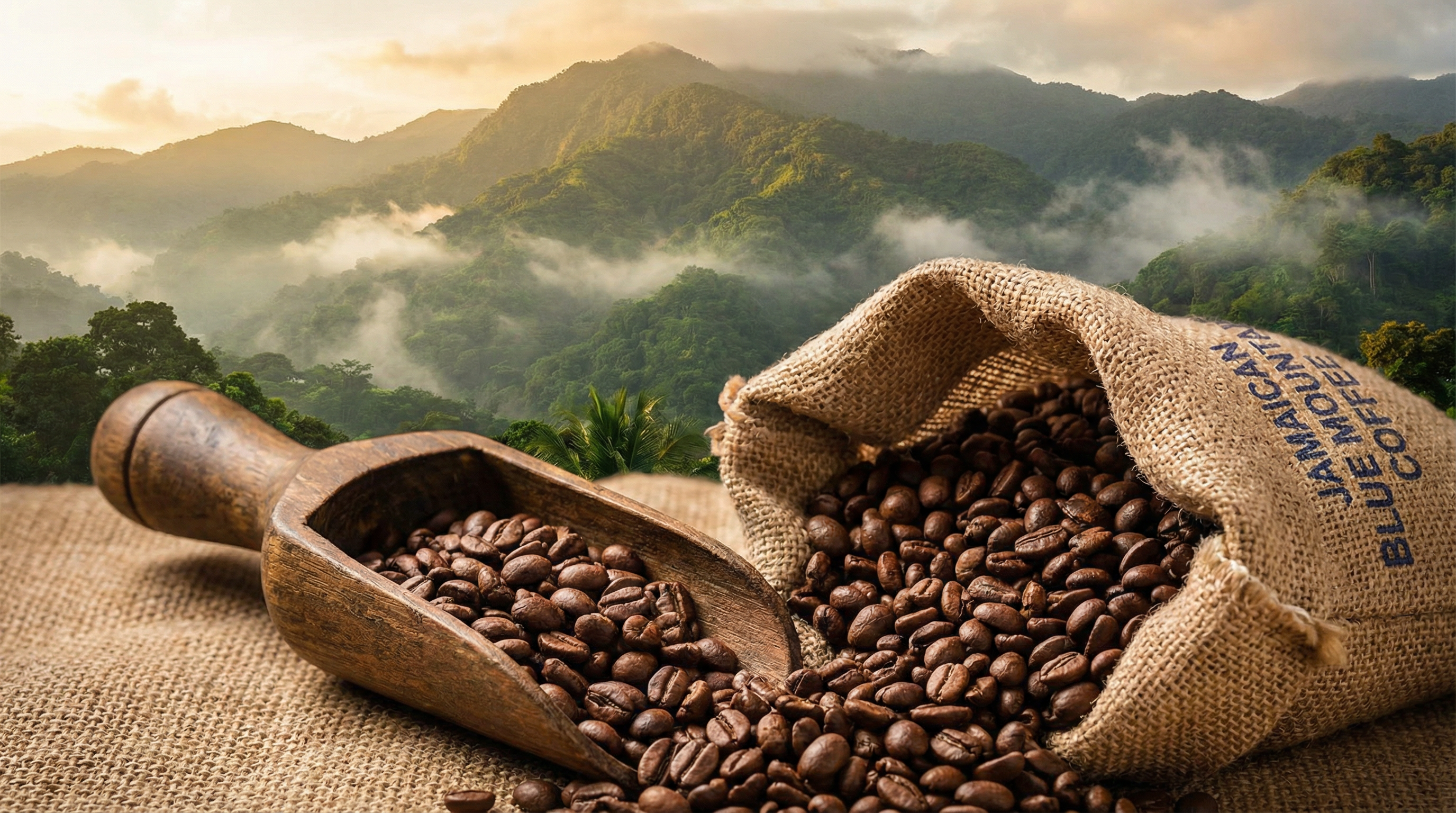
Jamaica Blue Mountain coffee is among the world’s most sought-after and expensive origins. Grown in the Blue Mountains of Jamaica at high altitude, with strict grading and limited production, it has a reputation for mild acidity, smooth body, and balanced flavor. This guide covers what defines Blue Mountain coffee, how it tastes, how it’s graded, and how to buy the real thing so you’re not paying a premium for a blend or a fake.
What Is Blue Mountain Coffee?
Only coffee grown in the Blue Mountain region of Jamaica can legally carry the name. The region is defined by the Jamaican government and includes specific parishes and elevations (typically above 3,000 feet in the Blue Mountain range). The climate—cool, misty, high altitude—and the volcanic soil contribute to the beans’ characteristics. Production is limited: the growing area is small, and much of the crop is exported to Japan under long-term contracts, so the amount available elsewhere is limited and prices are high. “Jamaica Blue Mountain” is a protected designation; look for coffees that are explicitly labeled as such and come from trusted roasters or importers who can trace the origin.
Flavor Profile
Blue Mountain coffee is usually described as mild, smooth, and balanced—not bold or aggressive. Expect low to moderate acidity, a smooth body (often medium), and subtle sweetness with little bitterness. It’s the kind of coffee that appeals to people who find other single-origins too sharp or too heavy. Because the flavor is relatively gentle, it’s often enjoyed with a simple brew method—drip, French press, or pour-over—so nothing masks the delicate notes. If you like bolder, fruitier, or more acidic coffees (like some Ethiopians or Kenyans), Blue Mountain might taste understated; if you prefer a smooth, easy-drinking cup, it can be a treat. For more on other prized origins, see our guides to Sidamo coffee and best decaf coffee for other smooth, approachable options.
Grading and Certification
Jamaican Blue Mountain coffee is graded by the Coffee Industry Board of Jamaica. The highest grade is Blue Mountain No. 1—largest bean size and strict defect limits. Other grades (e.g. No. 2, Peaberry) exist with different size and defect criteria. “Blue Mountain” and “Jamaica High Mountain” are not the same; the latter is grown at lower elevations outside the designated Blue Mountain zone and is typically less expensive and different in character. When you buy, look for roasters who specify Blue Mountain (and ideally the grade) and who can tell you where the beans came from. Blends that say “contains Blue Mountain” or “Blue Mountain style” may have only a small percentage of actual Blue Mountain; read the label and expect to pay a premium for 100% Blue Mountain.
How to Buy Authentic Blue Mountain
Buy from reputable roasters or specialty coffee sellers who clearly state the origin and, if possible, the grade. Price is a rough guide: real Blue Mountain is expensive. If a bag is suspiciously cheap for “Jamaica Blue Mountain,” it may be a blend, a lower grade, or mislabeled. Freshness matters: buy from a roaster who shows a roast date and use the coffee within a few weeks of that date for the best flavor. Store in an airtight container away from light and heat. Brew with a method that doesn’t overwhelm the coffee—see our best coffee makers for drip and manual options that let the flavor shine.
Conclusion
Genuine Jamaica Blue Mountain is a mild, smooth, and often expensive treat. Know what you’re paying for: check the label for 100% Blue Mountain and a trusted source, and enjoy it with a simple brew method so the delicate flavor comes through. If you’re exploring other smooth or single-origin coffees, our Sidamo coffee and best decaf coffee guides are good next reads.
See Also
- Sidamo Coffee — another distinctive origin from Ethiopia.
- Best French Press — a simple way to brew Blue Mountain at home.
- Best Coffee Makers — drip, manual, and more for your daily cup.