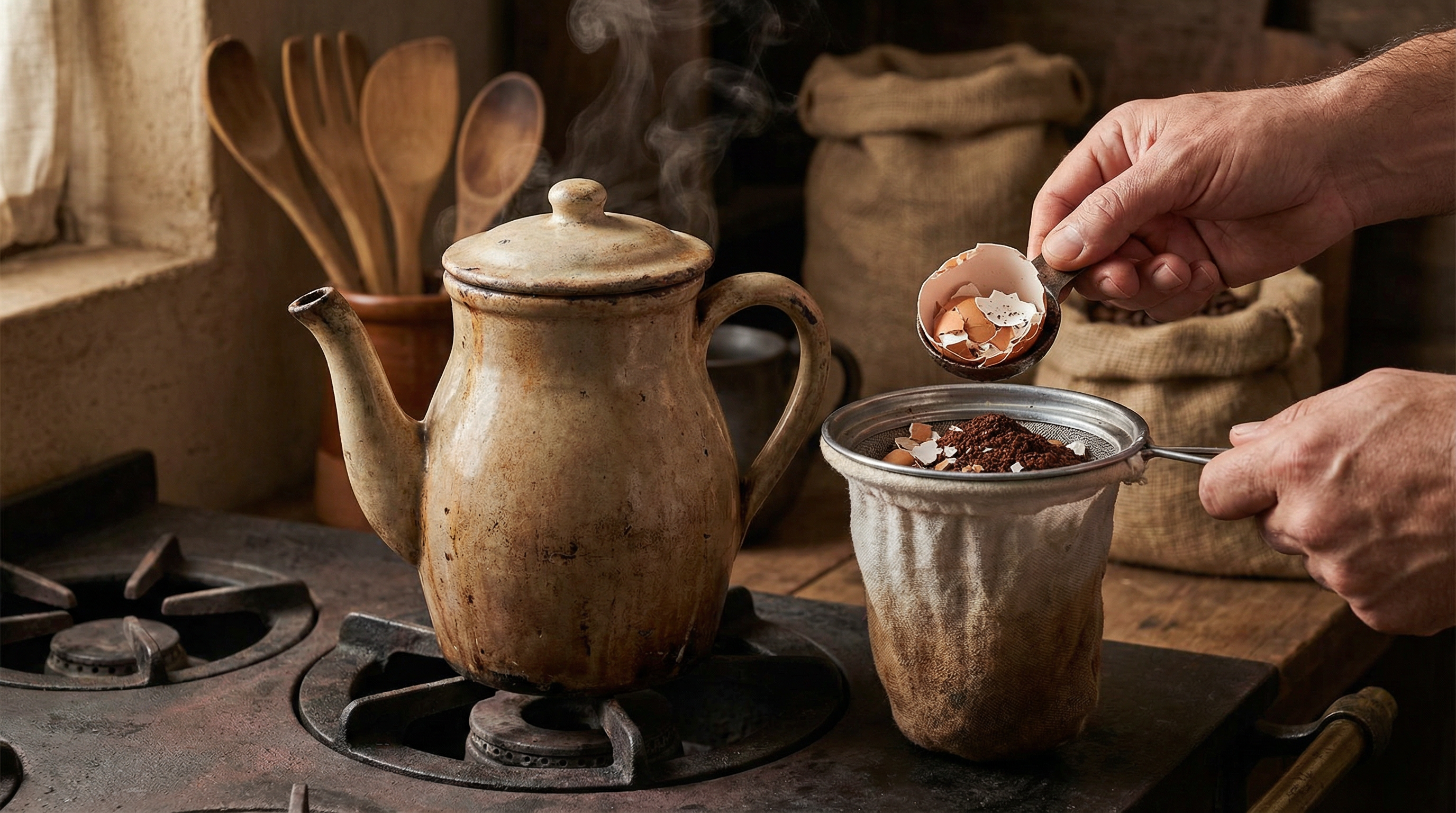
Adding eggshells to coffee might sound odd, but it’s an old trick for smoothing out the brew. For generations, home brewers and campfire cooks have used crushed eggshells to cut bitterness, help grounds settle, and add a bit of minerals to the cup. Here’s how it works, where the tradition comes from, and whether it’s worth trying in your own kitchen.
What Eggshells Do in Coffee
Eggshells are mostly calcium carbonate—the same compound in chalk and many antacids. When you add clean, crushed eggshells to your coffee grounds before brewing, a few things can happen. First, the calcium can bind with some of the bitter-tasting compounds (including certain acids and tannins) that extraction pulls from the beans. That doesn’t remove all bitterness, but many people notice a rounder, less harsh cup, especially with dark roasts or long brew times. Second, in methods where grounds are loose in the water (like cowboy coffee or a pot on the stove), the fine particles of shell can give the grounds something to cling to, so they sink to the bottom instead of floating. That makes it easier to pour a clearer cup without a mouthful of sludge. Third, a small amount of calcium can slightly buffer the acidity of the coffee. If you find some coffees too sharp or sour, a pinch of crushed shell might take the edge off without adding a weird taste—as long as you don’t overdo it.
The Tradition Behind It
Using eggshells in coffee shows up in a few different traditions. In Scandinavian-style coffee (especially in older American Scandinavian communities), a whole egg—shell and all—was sometimes added to a large pot of coffee. The egg helped clarify the brew and mellow the flavor, and the method was practical for making big batches without paper filters. In American pioneer and campfire cooking, “cowboy coffee” often involved adding a bit of egg or eggshell so the grounds would settle after boiling. That way you could pour a relatively clear cup from a pot that had been sitting in the coals. So the habit isn’t a random internet hack; it’s a low-tech, filter-free way to get a cleaner, less bitter cup when you don’t have a drip machine or a best French press handy.
How to Use Eggshells in Coffee Safely
If you want to try it, keep it simple and safe. Use clean, dry eggshells from eggs you’ve already cracked. Rinse the shells to remove any raw egg, let them dry (or bake them briefly in a low oven if you want to be extra sure they’re dry and sanitary), then crush them into small pieces. You don’t need a fine powder—pea-sized or a bit smaller is enough. For a typical pot or batch (e.g. 4–6 cups), one eggshell is usually plenty. Add the crushed shell to your grounds before you add water, so they brew together. If you use too much, you can get a chalky or flat taste, so start with one shell per batch and adjust from there. After brewing, the shells and grounds will sink; pour carefully to leave the sediment in the pot. Don’t use eggshells in an automatic drip machine—they can clog or damage the system. Stick to manual methods: stovetop, percolator, or a large immersion brew. If you’re curious about other ways to tweak your cup, see our guides to the best French press and best coffee makers for more brewing ideas.
Safety and Taste: What to Expect
Rinse and dry the shells so you’re not introducing raw egg into your coffee. If you’re immunocompromised or cautious about food safety, drying the shells in a low oven (e.g. 200°F for a few minutes) will reduce any lingering moisture and bacteria. The effect on taste is subtle—some people find it rounds out harsh or bitter notes; others notice little difference. It won’t turn bad coffee into great coffee, but it can take the edge off a very strong or over-extracted brew. If you like your coffee bright and acidic, you might find that eggshells dull that a bit; if you prefer a smoother, less sharp cup, they’re worth a try. There’s no need to do it every day—think of it as an option for certain brews or when you’re making a big pot the old-fashioned way.
When It Makes Sense (and When It Doesn’t)
Eggshells in coffee make the most sense when you’re brewing without a paper filter—cowboy style, percolator, or a large pot—and you want clearer, less bitter coffee. They’re less useful (and often not appropriate) for drip machines, single-serve pod brewers, or espresso. If you already use a good best coffee maker with a proper filter and the right water temperature, you might not need eggshells at all; improving your grind size, ratio, or water quality could have a bigger impact. But if you’re camping, making a big batch on the stove, or just curious about an old-school trick, adding one clean, crushed eggshell per batch is a safe and simple experiment.
Conclusion
Eggshells in coffee are a traditional tweak that can take the edge off a strong or bitter brew and help grounds settle when you’re not using a filter. Use one clean, crushed shell per batch, keep it to manual brewing methods, and don’t expect miracles—just a slightly smoother, rounder cup. Experiment with a small amount and see if you like it.
See Also
- Best French Press — for full-bodied coffee without a plug-in machine.
- Best Coffee Makers — drip, single-serve, and more for everyday brewing.
- Coarse Ground Coffee — grind size for methods like percolator and French press.