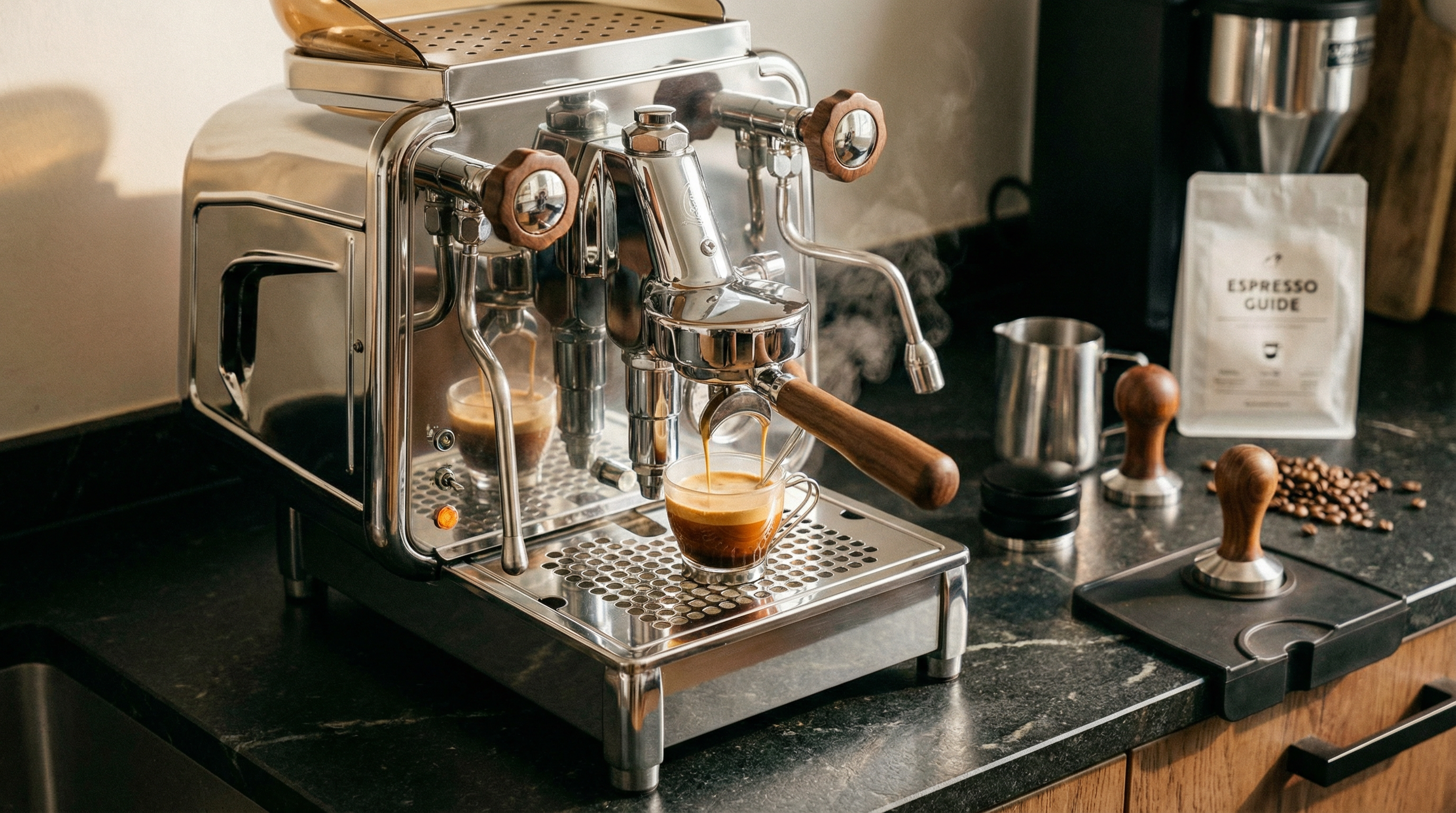
Choosing the best espresso machine for your home depends on your budget, counter space, and how much you want to learn. Espresso is more demanding than drip or single-serve: you need the right grind, dose, tamp, and machine settings to get a good shot. But once you find a machine that fits your routine, you can pull shots and steam milk for lattes and cappuccinos without leaving the house. This guide covers what to look for, the main types of machines, and how to narrow your choice so you end up with something you’ll actually use.
What Makes a Good Home Espresso Machine?
A good home espresso machine does three things reliably: it heats water to the right temperature (usually around 195–205°F at the group head), it builds and holds pressure (typically 8–10 bar) so water is forced through the puck of coffee, and—if you care about milk drinks—it steams milk without taking forever or running out of steam. Entry-level machines often use a single boiler: you brew first, then switch to steam, which means a short wait between pulling shots and frothing milk. More expensive models use a dual boiler or a heat-exchanger design so you can brew and steam at the same time. Pump type matters too: vibratory pumps are common and fine for home use; rotary pumps are quieter and often found on prosumer machines. If you want to focus on espresso only and don’t care about milk, a simple single-boiler machine and a good best burr grinder can be enough. If you drink mostly lattes and cappuccinos, look for a capable steam wand and a machine that can keep up with back-to-back drinks.
Boiler Type: Single, Dual, and Heat Exchanger
Single boiler: One boiler heats water for both brewing and steaming. You pull your shot(s), then switch the machine to steam mode and wait for it to come up to temperature. Simple and affordable, but there’s a delay between espresso and milk, and you can’t brew and steam at once. Fine for one or two drinks at a time. Dual boiler: One boiler for brew water, one for steam. You can pull shots and steam milk simultaneously, and temperature control is usually very stable. Better for households that make several milk drinks in a row, but these machines cost more and take more counter space. Heat exchanger (HX): One boiler runs hot; brew water is heated by passing through a heat exchanger. You can typically brew and steam without switching modes. HX machines sit between single and dual boiler in price and complexity; they can be trickier to temperature-stabilize but are popular among enthusiasts. When comparing models, read reviews for real-world temperature stability—some single boilers are surprisingly consistent, and some HX machines need a “cooling flush” to avoid overheating the brew water.
Built-in Grinder vs Separate Grinder
Machines with a built-in grinder (often called “all-in-one” or “bean-to-cup”) are convenient: you load beans, press a button, and get espresso. The downside is that the built-in grinders are usually a step down from a good standalone burr grinder. For serious espresso, grind quality is huge—wrong grind size or uneven particles lead to sour, bitter, or channeled shots. If your budget allows, a separate quality burr grinder and a dedicated espresso machine will usually give you better results than an all-in-one at the same total price. If you want the simplest possible workflow and are okay with “good enough” rather than “best possible,” an all-in-one can still be the best espresso machine for you. It’s a trade-off between convenience and ceiling.
Steam Wand and Milk Drinks
If you drink lattes, cappuccinos, or flat whites, the steam wand matters. Panarello wands (often a plastic sleeve that fits over the steam tip) are common on entry-level machines and produce foam easily but with less control. A proper single-hole or multi-hole stainless steam wand gives you more control over texture and is easier to keep clean. Look for a wand that articulates so you can position the pitcher comfortably. Power matters too: weak steam means long wait times and thin foam. If you’re comparing machines, check reviews for steam performance and whether the machine can do several drinks in a row without running out of steam or needing a long recovery. For a deeper dive into milk-based drinks, see our comparison of latte vs latte macchiato vs flat white.
Entry-Level and Mid-Range Picks
Entry-level home espresso machines (roughly $200–500) are usually single boiler with a vibratory pump. They’re capable of real espresso and steamed milk if you pair them with a decent grinder and take time to learn dose, tamp, and grind. Look for models with a proper portafilter (58 mm is common; 54 mm is also fine), a three-way solenoid so the puck doesn’t stay soggy, and a metal group where possible. Mid-range machines ($500–1,200) often add better temperature stability, larger boilers, or a heat-exchanger design. Some have programmable volumetric shots or pre-infusion. If you’re budget-conscious, our best espresso machine under $500 roundup can help you focus on machines that deliver the most for the price. Always check current reviews and user feedback—build quality and reliability vary by brand and model year.
What to Prioritize When You Buy
Start with how you’ll use the machine: mostly espresso shots, or mostly milk drinks? How many drinks in a row do you typically make? That will steer you toward single boiler vs dual/HX and toward the right steam performance. Then set a budget that includes a grinder if you don’t already have one suitable for espresso. Allocate at least as much (or more) to the grinder as to the machine—a great machine with a bad grinder will frustrate you. Counter space and noise are real constraints: some machines are huge and loud. Finally, read long-term reviews and owner comments. Espresso machines can develop leaks, scale issues, or pump problems; choose a brand with good support and available parts.
Conclusion
The best espresso machine for you is the one that fits your routine, budget, and skill level. Entry-level single boilers can pull great shots with a good grinder; if you want to steam milk often and make multiple drinks, consider a dual boiler or heat exchanger. Invest in a solid burr grinder, learn the basics of dose and tamp, and give yourself time to dial in. Once you’re there, you’ll have café-style drinks at home whenever you want.
See Also
- Best Espresso Machine Under $500 — focused picks when budget is tight.
- Best Burr Grinders — the grinder is half the equation for good espresso.
- Latte vs Latte Macchiato vs Flat White — understand the drinks you’re making.
- Best Coffee Makers — compare with drip, single-serve, and more.