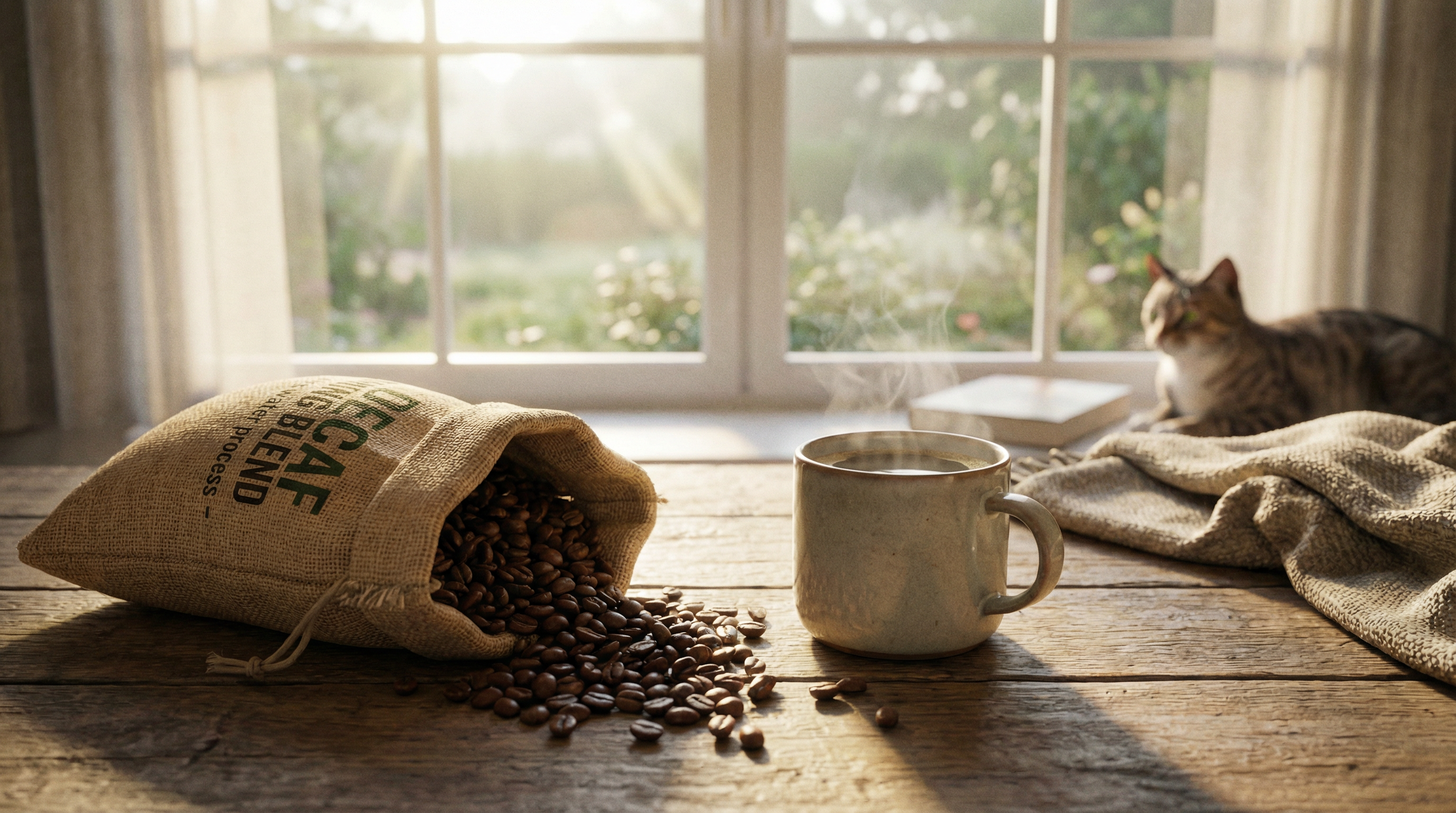
Decaf has come a long way. If you remember it as bland or chemical-tasting, today’s best decaf coffee can be rich, nuanced, and satisfying—whether you’re cutting back on caffeine for health, sleep, or preference. This guide covers how decaf is made, what makes decaf taste good, and what to look for when you buy so you don’t have to settle for a mediocre cup.
How Decaf Is Made
Decaffeination removes most of the caffeine from green (unroasted) coffee beans while trying to preserve flavor. No process removes 100% of caffeine—regulations typically allow a small amount to remain (e.g. in the US, 97% or more must be removed to label as decaf). The main methods are:
Solvent-based: Beans are steamed or soaked, then treated with a solvent (methylene chloride or ethyl acetate) that binds to caffeine. The solvent is removed and the beans are dried. “Swiss water” is sometimes confused with this—see below. Water-based (Swiss Water Process): Beans are soaked in water; the water is then passed through a carbon filter that captures caffeine but not the flavor compounds. That “flavor-charged” water is used to soak new beans so caffeine is extracted but flavor is largely retained. No chemical solvent is used. CO2 process: Pressurized carbon dioxide is used to extract caffeine. It’s efficient and often used for large batches. Sugar cane / ethyl acetate (natural): Ethyl acetate can be derived from sugar cane; the process is sometimes marketed as “natural” or “sugar cane decaf.” It’s still a solvent process but the compound can come from a natural source.
Many roasters specify the process on the bag (e.g. “Swiss Water decaf”). If you’re sensitive to the idea of solvents, look for Swiss Water or similar water-only methods. For flavor, the quality of the green beans and the skill of the roaster matter as much as the process.
What Makes Decaf Taste Good
Good decaf starts with good green beans. Some decaf is made from lower-grade beans on the assumption that decaf drinkers won’t notice—but the best decaf coffees use the same quality standards as regular coffee. Roast matters too: decaf can behave differently in the roaster (it’s often a bit more fragile), so roasters who take care with time and temperature produce better results. Freshness is as important as with regular coffee: buy from roasters who show a roast date and use the beans within a few weeks for the best flavor. Store in an airtight container away from light and heat. Brew method matters—use a method you enjoy, whether that’s drip, French press, or single-serve. A burr grinder will improve flavor if you’re using whole bean decaf.
What to Look For When You Buy
Look for origin and process on the label—roasters who name the decaffeination method and the region (e.g. “Swiss Water decaf, Colombian”) are usually more committed to quality. Whole bean decaf stays fresh longer than pre-ground; grind right before brewing when you can. If you need pre-ground, choose a grind that matches your brewer (drip, French press, etc.). Price is a rough guide: very cheap decaf is often made from lower-grade beans. You don’t have to spend a fortune, but expect to pay a bit more than the lowest shelf option for something that tastes like real coffee. Taste notes on the bag can help you choose—if you like fruity, floral coffees, look for a decaf with similar descriptors; if you prefer chocolate and nuts, look for that. Try a few brands and processes to find what you like.
Brewing Decaf at Home
Brew decaf the same way you’d brew regular coffee. Use the same ratio (e.g. 1:15 to 1:17 coffee to water), same water temperature (195–205°F), and the same grind size for your method. Decaf sometimes extracts a bit faster because the beans can be more porous after processing—if your cup tastes bitter or over-extracted, try a slightly coarser grind or a shorter brew time. For equipment ideas, see our best coffee makers, best French press, and best single-serve coffee makers guides.
Conclusion
You don’t have to settle for bland decaf. With quality beans, a clear decaffeination process, and a good brew method, decaf can be rich and satisfying. Look for roasters who name the process and origin, buy whole bean when possible, and store and brew with the same care you’d give regular coffee.
See Also
- Best Coffee Makers — drip, single-serve, and more for brewing decaf.
- Best French Press — simple, full-bodied decaf at home.
- Coffee and Antioxidants — decaf still contributes antioxidants to your diet.