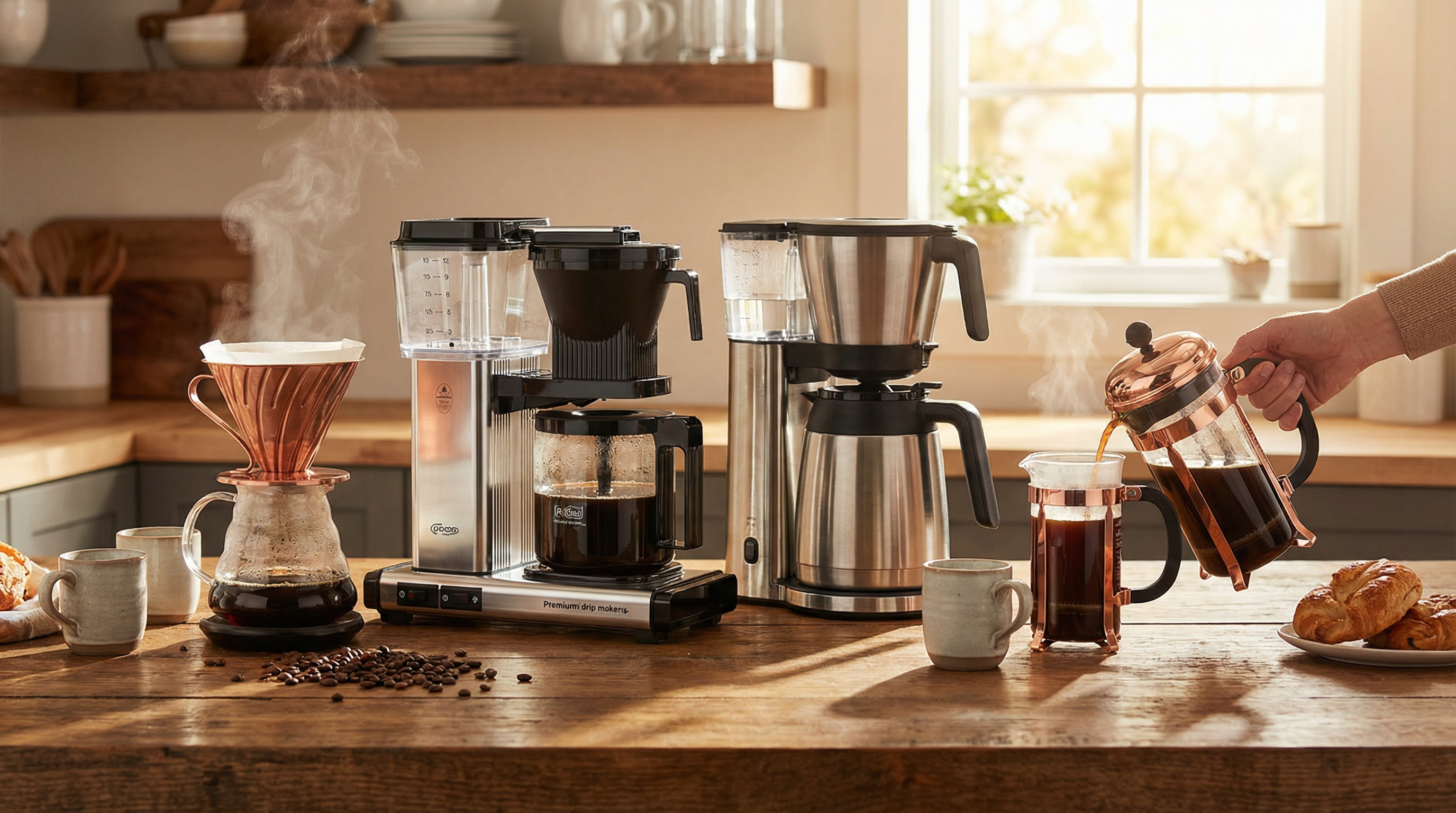
Choosing the best coffee maker for your home can feel overwhelming. Walk into any store or browse online and you’re hit with dozens of options: drip machines, single-serve pod brewers, espresso machines, French presses, and pour-over gadgets. The good news is that there’s no single “best” machine—there’s the one that fits how you drink coffee, how much counter space you have, and what you’re willing to spend. This guide walks you through the main types, what to look for, and how to narrow your choice so you end up with a brewer you’ll actually use every day. We’ll cover drip and programmable machines, single-serve and pod brewers, espresso at home, and manual options like the best French press so you can compare them with a clear head.
How Do You Drink Coffee?
Before comparing models, it helps to be honest about your habits. Do you drink one big mug in the morning or several smaller cups through the day? Do you prefer black filter coffee, or do you like milk-based drinks like lattes and cappuccinos? Are you the only coffee drinker in the house, or do you need to brew for two or more? Your answers will steer you toward a category. If you want quick, consistent cups with minimal fuss, a good drip or single-serve machine might be the best coffee maker for you. If you’re after espresso and milk foam, you’ll need an espresso machine (and likely a grinder). If you enjoy the ritual and don’t mind a few minutes of hands-on brewing, a French press or pour-over setup could be a better fit. There’s no wrong answer—only what fits your routine.
Drip Coffee Makers
Drip machines are what most people picture when they think “coffee maker.” You add water and ground coffee, press a button, and get a full pot or a smaller batch. The best drip coffee makers heat water to the right temperature (around 195–205°F is ideal for extraction), saturate the grounds evenly, and keep the brewed coffee at a drinkable temperature without burning it. Cheap models often don’t get the water hot enough or spray it unevenly, so you get weak or bitter spots. Mid-range and up usually improve on both. Look for models that let you control brew strength or temperature if you care about tweaking your cup. Programmable timers are handy if you like waking up to ready-made coffee—set it the night before and you’re good to go. Consider capacity: a 12-cup brewer is overkill for one person and can waste water and coffee if you only make a few cups, while a 5-cup might be too small for a household that drinks multiple rounds at breakfast. Glass carafes are easy to see through and clean; thermal carafes keep coffee hot longer without a hot plate, which also avoids that scorched taste when the coffee sits for an hour. Before you buy, check independent reviews and, if possible, current test summaries—performance and reliability can vary a lot between brands and price points. If you want a machine with a timer and larger capacity, look for programmable drip models in current roundups.
Single-Serve and Pod Machines
Single-serve coffee makers brew one cup at a time, usually using pods (like K-Cups) or capsules. They’re fast, consistent, and easy to clean—no measuring, no leftover coffee going stale. The trade-off is cost per cup and, for some people, environmental impact. Pods have gotten more recyclable in recent years, and reusable pods let you use your own ground coffee in many Keurig-style machines, so the picture isn’t as bleak as it used to be. If you go this route, look for a machine that fits the pods you like, offers multiple cup sizes (4, 6, 8, 10 oz and beyond), and has a decent water reservoir so you’re not refilling after every two cups. Some models include a strong-brew or hot-water option, which is useful for Americanos, tea, or instant soup. If you’d rather use your own ground coffee most of the time, consider a best single-serve coffee maker that accepts a reusable basket or a dedicated single-cup drip machine. They’re less common but give you more control and less waste. Either way, the “best” single-serve maker is one you’ll use daily without frustration, so pay attention to noise (some are surprisingly loud), descaling needs (hard water will demand it more often), and how easy it is to get replacement parts. We’ve got a dedicated guide to how to make a strong cup of coffee with Keurig if you already own one and want to get more out of it.
Espresso Machines
Espresso machines are in a different league. They force hot water through finely ground, tightly packed coffee at pressure (typically 9 bar or so). The result is a small, concentrated shot that forms the base of lattes, cappuccinos, and many other drinks. Entry-level machines are usually semi-automatic: you grind, dose, and tamp the coffee, then start the shot. More expensive models might have built-in grinders, programmable volumes, or dual boilers so you can steam milk while pulling shots. The best espresso machine for you depends on your budget and how deep you want to go. If you’re just starting out, a simple semi-automatic with a good separate best burr grinder will beat a fancy machine with a bad grinder—espresso is unforgiving when the grind is off. If you’re serious about milk drinks, look for a machine with a capable steam wand and, ideally, enough power to brew and steam without long waits between shots. Budget-conscious shoppers can check our best espresso machine under $500 roundup. Do some research on current models and user reviews; espresso is fussy, and small design choices (e.g. boiler size, pre-infusion, portafilter weight) can make a big difference in consistency and ease of use.
French Press and Manual Options
French presses, pour-over cones, and other manual brewers don’t plug in. You add coffee and water, wait a few minutes, and press or pour. They’re cheap, portable, and put you in control of every variable. The best French press is one that’s sturdy, easy to clean, and the right size for your typical batch. Glass is classic; double-wall or metal options are more durable. For pour-over, you’ll need a cone, filters, and a kettle (gooseneck is ideal for control). Manual brewing isn’t for everyone—it takes a few minutes and a bit of practice—but if you enjoy the process, the coffee can be excellent. Many coffee lovers keep a French press or pour-over setup even when they have a drip or espresso machine, for weekends or when they want a single great cup.
What to Look For in Any Coffee Maker
A few things matter across the board. Ease of use and cleaning: if it’s a hassle to take apart, descale, or wipe down, you’ll use it less and resent it more. Consistency: the best coffee makers produce similar results from one brew to the next, so you’re not guessing whether today’s cup will be weak or bitter. Durability and support: read reviews for reliability (leaks, pumps dying, plastic cracking) and check that replacement parts or descaling kits are available for your region. Your grinder: for anything except pre-portioned pods, fresh ground coffee makes a huge difference. Pre-ground goes stale within days or weeks; whole beans ground right before brewing keep flavor and aroma. If you’re buying a drip or espresso machine, consider budgeting for a decent burr grinder too—it’s one of the best upgrades you can make. Space and noise: make sure the machine fits your kitchen and that you’re okay with how loud it is, especially for grinders and espresso pumps. If you share the house with light sleepers, a quiet drip or a manual option might be kinder than a screaming grinder at 6 a.m.
How to Choose Your Best Coffee Maker
Start with your main use case: mostly filter coffee, mostly espresso, or a mix? Then set a rough budget and look at two or three options in that range. Compare specs and, more importantly, real-world reviews and long-term reliability. If you can, watch a video or two of people using the machine—you’ll see how messy or simple it is. Finally, think about the next few years. A machine that’s a bit more capable or easier to maintain might be worth the extra cost if you’re going to use it every day. The best coffee maker is the one that fits your life and makes coffee you actually want to drink.
Conclusion
There’s no single best coffee maker for everyone. Drip machines are great for volume and simplicity; single-serve for speed and consistency; espresso machines for real shots and milk-based drinks; and French press or pour-over for hands-on control and rich flavor. Match the type to how you drink coffee, do a bit of research on current models and prices, and invest in good beans and a good grinder when you can. With the right setup, your best coffee maker will be the one that’s on your counter, not sitting in a cupboard.
See Also
- Best Espresso Machine — if you’re leaning toward shots and milk drinks at home.
- Best French Press — for a simple, full-bodied brew without a plug-in machine.
- Best Burr Grinders — fresh grinding makes any brewer taste better.
- Best Single-Serve Coffee Makers — when you want one fast, consistent cup at a time.