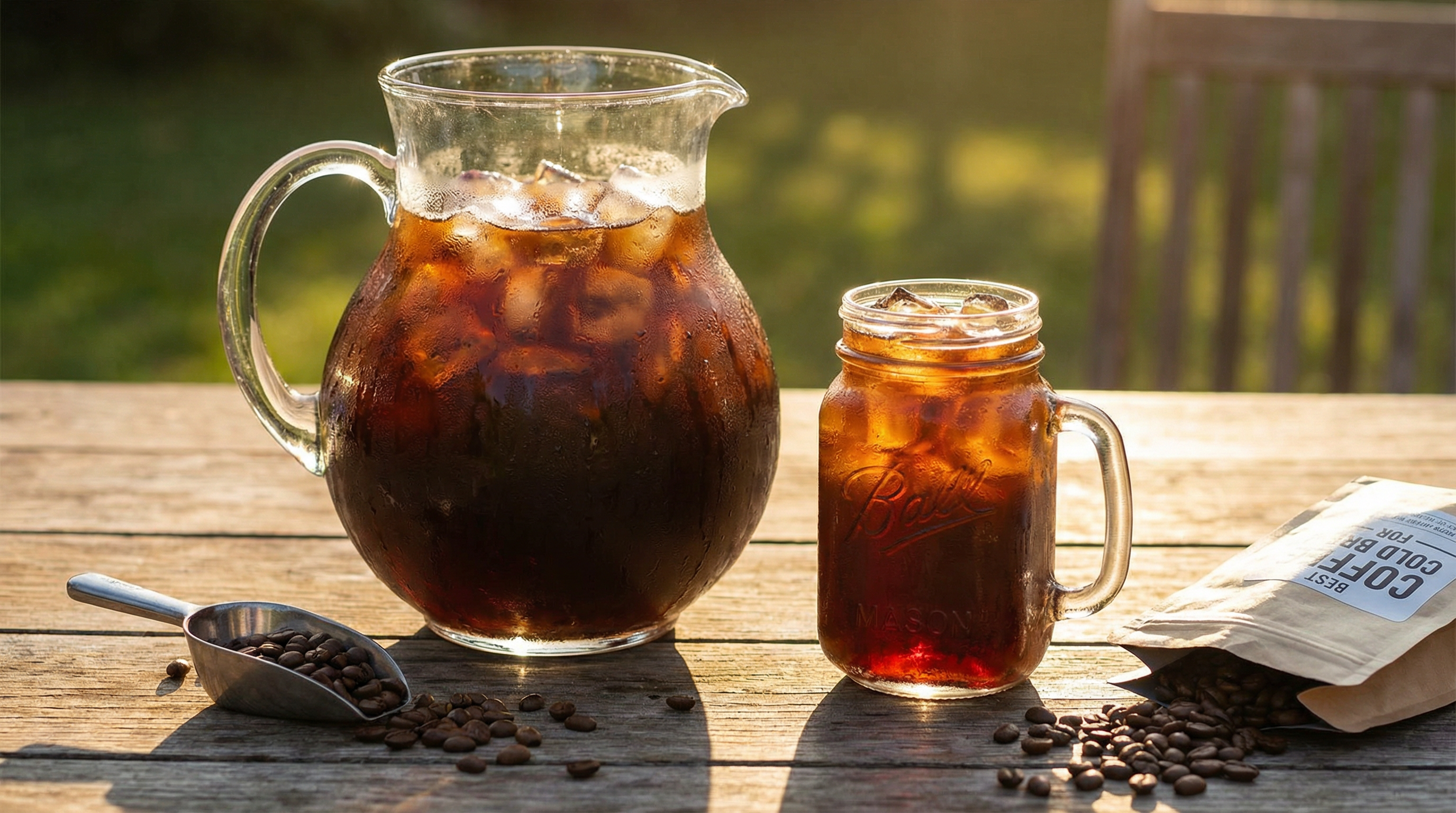
Cold brew is coffee steeped in cold (or room-temperature) water for many hours, then strained. The result is smooth, low-acidity, and often concentrated—great over ice or diluted with water or milk. The best coffee for cold brew isn’t one specific bean; it’s a matter of choosing roasts and origins that suit the method and your taste. This guide covers what works well, grind size, ratio, and how to use your cold brew with the rest of your setup—whether you’re using a French press, a dedicated cold brew maker, or a simple jar.
Why Cold Brew Tastes Different
Cold water extracts more slowly than hot water, so you get less acidity and fewer of the compounds that can make hot coffee taste sharp or bitter. The long steep time (often 12–24 hours) still pulls out plenty of flavor and caffeine, but the profile is rounder and smoother. That’s why cold brew is often described as “smooth” or “mellow”—and why it’s a good option if you find hot coffee hard on your stomach. The best coffee for cold brew is one that tastes good when extracted this way: typically medium to dark roasts and beans that aren’t prized mainly for bright, fruity acidity (though you can experiment with light roasts too).
Roast Level: Medium to Dark
Medium and dark roasts are the most popular for cold brew. They tend to give chocolate, nutty, and caramel notes that come through well in a long cold steep. Light roasts can work but often lose some of their delicate fruit and floral notes in cold brew; if you try them, use a slightly shorter steep or a finer grind to get more extraction. Decaf is also a great choice for cold brew—smooth and low-acid without the caffeine. See our best decaf coffee for bean ideas. There’s no single “best” roast; start with a medium or dark you already like and adjust from there.
Whole Bean vs. Pre-Ground, and Grind Size
Whole bean coffee stays fresh longer. Grind right before you steep for the best flavor. Pre-ground is convenient but goes stale faster; if you use it, choose a coarse grind (cold brew is usually steeped coarse so it’s easier to strain and doesn’t over-extract). For whole bean, use a burr grinder set to coarse—similar to French press grind. Too fine and you’ll get sludge and possible bitterness; too coarse and the brew might taste weak. A typical ratio is about 1:5 to 1:8 coffee to water (by weight) for concentrate, then dilute with water or milk when you drink. Steep 12–24 hours in the fridge or at room temperature, then strain. For equipment, a large French press or a dedicated cold brew pitcher works well; you don’t need a fancy machine.
Single-Origin vs. Blend
Blends are often designed for balance and body, which can work well in cold brew. Single-origins let you taste a specific region—some people love Ethiopian or Colombian as cold brew. Try both and see what you prefer. If you’re curious about origins, our guides to Jamaica Blue Mountain and Sidamo explain what to expect from those beans; you can experiment with them cold-brewed too. The “best” coffee for cold brew is the one you enjoy drinking—so don’t hesitate to use beans you already like for hot coffee.
Storage and How Long Cold Brew Lasts
Cold brew concentrate keeps well in the fridge. In a sealed container it’s usually good for about a week—maybe longer if your container is very clean and your fridge is cold. If it smells or tastes off, toss it. For more on shelf life, see our article on can cold brew coffee go bad (Priority 2—if not yet live, stick to the one-week guideline and trust your nose). Dilute the concentrate when you’re ready to drink so the rest stays strong and fresh.
Conclusion
The best coffee for cold brew is typically a medium or dark roast that you like—whole bean, coarse ground, and steeped 12–24 hours. Use a ratio that gives you a concentrate you can dilute, and store it in the fridge for up to about a week. Pair with a good grinder and a simple French press or cold brew pitcher, and you’ll have smooth cold brew whenever you want it.
See Also
- Best French Press — great for making cold brew in a batch.
- Best Burr Grinders — coarse, even grind for cold brew.
- Best Decaf Coffee — decaf works very well for cold brew.