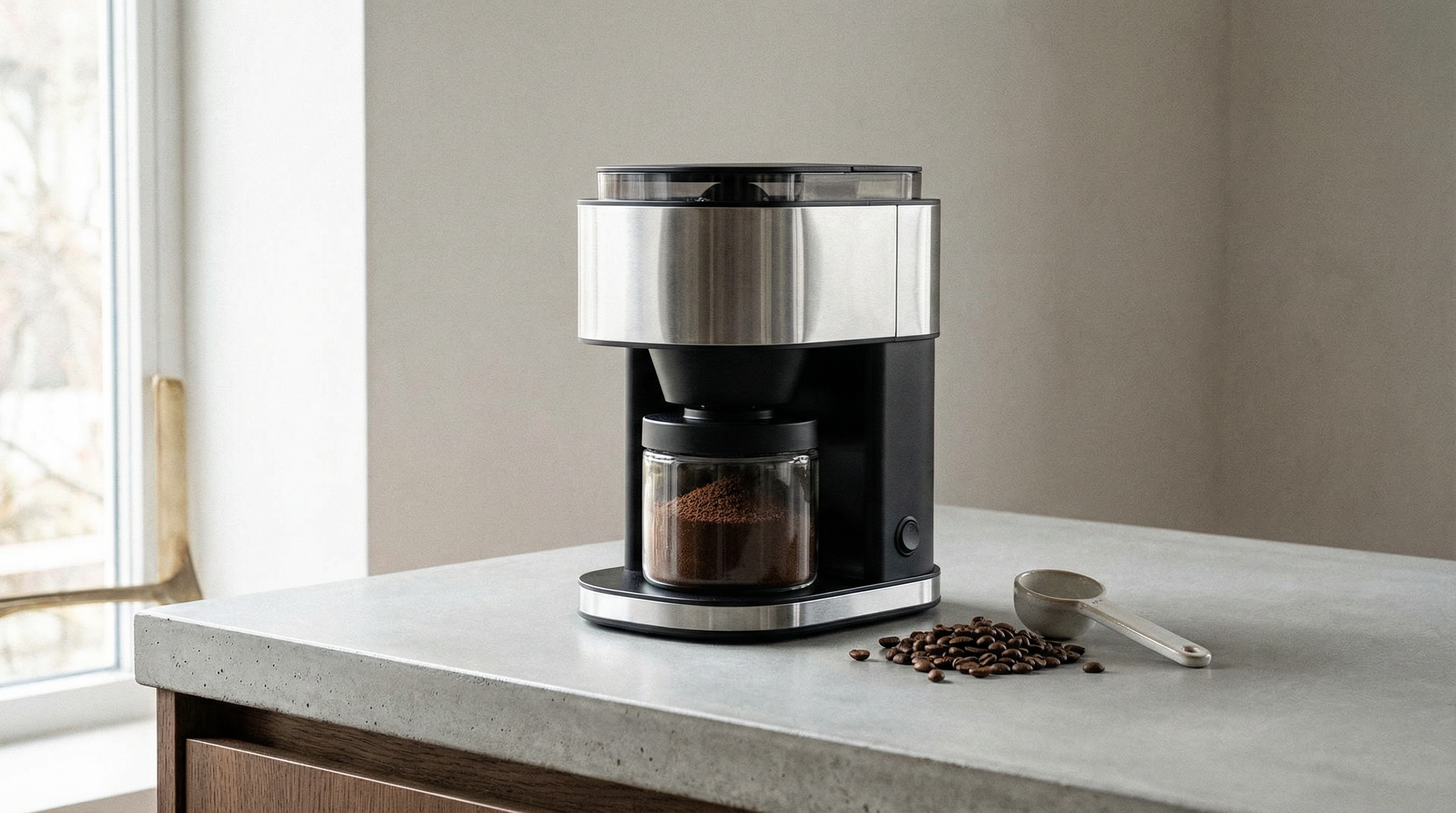
A good burr grinder is one of the best upgrades you can make for your coffee. Blade grinders chop beans randomly into a mix of dust and chunks, which leads to uneven extraction—some parts of the grounds over-extract (bitter) and others under-extract (sour). Burr grinders crush or cut the beans between two burrs so the particle size is much more even. That means better flavor, clearer cups, and more control whether you’re brewing drip, pour-over, or espresso. This guide covers why burr grinders matter, the difference between conical and flat burrs, and what to look for so you pick the best burr grinder for your brew method and budget.
Why Burr Grinders Matter
When water hits coffee grounds, it extracts flavor (and caffeine) from the surface of the particles. If the particles are all over the map—from powder to coarse chunks—you get a mix of over-extracted and under-extracted bits in the same cup. The result is muddier flavor, more bitterness or sourness, and less clarity. Burr grinders produce a much more consistent particle size. You still choose how fine or coarse to go (espresso fine, drip medium, French press coarse), but within that setting the grounds are uniform. That’s why the best burr grinders improve every brew method: drip, French press, pour-over, and espresso all benefit from even extraction. If you’re using a blade grinder today, switching to even an entry-level burr grinder will often be a bigger jump in quality than upgrading your coffee maker.
Conical vs Flat Burrs
Conical burrs look like a cone inside a ring. They’re common in home grinders and are generally quieter and less expensive. They produce a good particle distribution and some people prefer the flavor profile—often described as a bit more body and less sharpness. Flat burrs are two flat rings with cutting surfaces. They’re often used in commercial and higher-end home grinders. Flat burrs can produce a more even grind and are often preferred for espresso because of the consistency at fine settings. They tend to be noisier and more expensive. For most home users, a good conical burr grinder is plenty. If you’re deep into espresso and want to maximize clarity and consistency, flat burrs are worth considering as you move up in price. Don’t get hung up on “conical vs flat” at the expense of build quality and consistency—a well-made conical grinder will beat a cheap flat one.
Grinder Size and Capacity
Burr grinders come in different sizes. Capacity (how many beans the hopper holds) matters if you single-dose (weigh beans per shot or batch) or if you fill the hopper and grind on demand. Single-dosing is popular among espresso enthusiasts: you weigh exactly the dose you need, grind it, and leave the hopper empty so beans don’t sit for days. Some grinders are designed for that workflow (small hopper or no hopper). Others have a large hopper and a timer or grind-by-weight. Physical size matters for your counter: some grinders are tall or wide. Check dimensions if space is tight. Noise is real—burr grinders can be loud, especially at fine settings. If you’re grinding early in the morning with others in the house, look for reviews that mention noise.
Electric vs Manual Burr Grinders
Electric burr grinders are the default for most people: you pour in beans, set the grind size, and push a button. They’re fast and convenient. Manual (hand-crank) burr grinders are smaller, quieter, and portable—great for travel or camping. They take more effort and time, especially for espresso, but the best manual burr grinders can produce excellent particle consistency. If you’re mostly doing drip or pour-over, a manual grinder is manageable; for daily espresso, most people prefer electric. If you prefer a compact, quiet option, hand-crank burr grinders are also available and work well for drip and pour-over; for daily espresso, most people prefer electric.
Matching the Grinder to Your Brew Method
Espresso demands the finest, most consistent grind. Not every burr grinder can do espresso well—cheap ones often can’t go fine enough or produce too many boulders and fines. If espresso is your goal, look for grinders that are explicitly recommended for espresso and that have enough steps (or stepless adjustment) to dial in. Drip and pour-over need a medium grind. Most burr grinders handle this well. French press and cold brew need a coarser grind. Again, most burr grinders can do this; the key is consistency so you don’t get a muddy cup. Some grinders are marketed as “espresso-capable” but are better for filter; read reviews for your intended use. If you use both espresso and drip, look for a grinder that can switch between fine and coarse without too much hassle (some retain grounds and need a purge when you change setting).
What to Look For When You Buy
Build quality: Metal burr chambers and sturdy construction usually mean better longevity and less static. Burr material: Steel burrs are standard; ceramic burrs are sometimes used and can last longer but may behave differently. Settings: More steps (or stepless) give you finer control, especially for espresso. Ease of cleaning: Burrs and chutes need occasional cleaning; removable burrs or easy access help. Static and retention: Some grinders hold a gram or two of grounds inside; you can tap or use a bellows to get them out. It’s a small thing but can affect dose accuracy for espresso. Check our best coffee makers guide to see how a grinder fits into a full setup—whether you’re on drip, single-serve, or espresso.
Conclusion
Investing in a solid burr grinder will improve every cup you make, no matter how you brew. Match the grinder to your primary brew method: espresso needs fine, consistent grind; drip and pour-over need a good medium; French press and cold brew need coarse. Choose conical or flat based on budget and preference, and leave room in your budget for quality—the best burr grinder for you is the one that fits your workflow and lasts for years.
See Also
- Best Espresso Machine — the grinder is half the equation for great shots.
- Best French Press — coarse, even grind makes a big difference.
- Best Coffee Makers — drip, single-serve, and more for your home setup.